多媒體


Greater Bay Area Homeland Youth Community Foundation Organises Shanghai ‘Sea, Land, and Air Technology Experience Tour’ Students Visit Leading Manufacturers to Witness China’s Remarkable Transport and Engineering Achievements
To give Hong Kong youth first-hand insight into China’s latest advances in cutting-edge technology—ranging from high-end shipbuilding and smart vehicles to aerospace—the Greater Bay Area Homeland Youth Community Foundation (the Foundation) fully sponsored the Shanghai ‘Sea, Land and Air’ Technology Experience Tour from 23 to 27 June, benefiting more than 150 students and teachers.
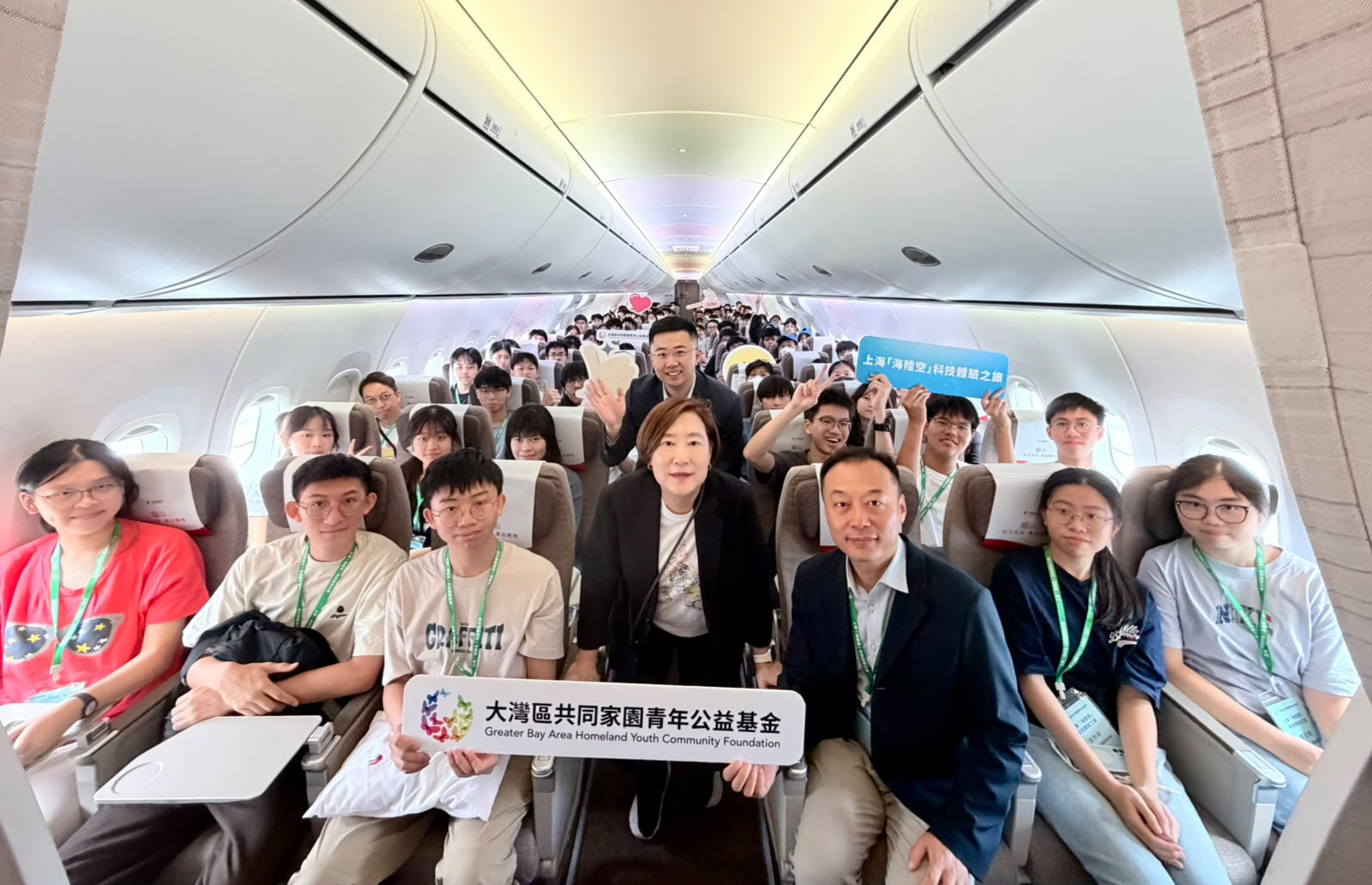
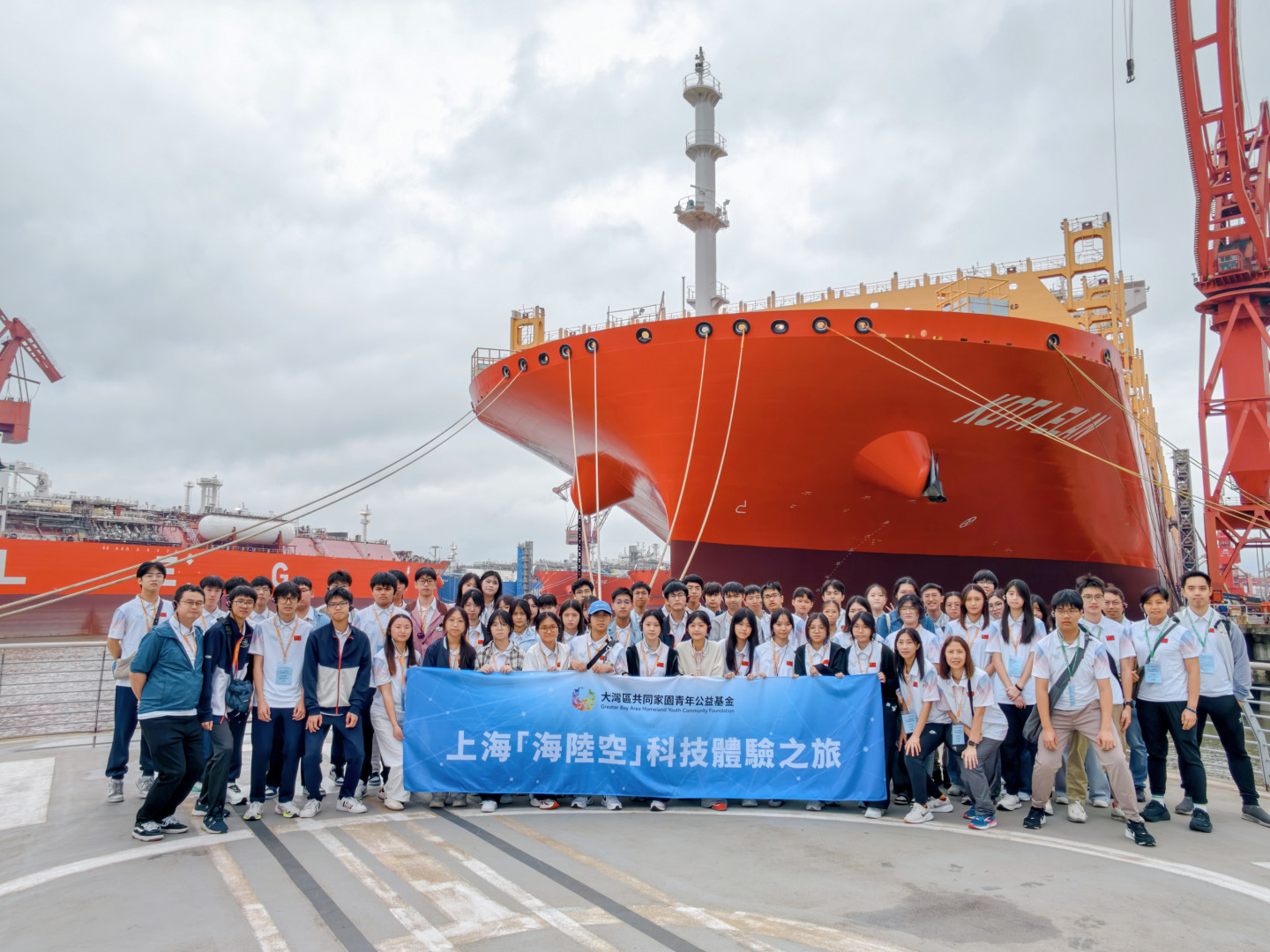
The five-day itinerary was packed with highlights. The group flew to Shanghai on a specially chartered C919, China’s self-developed commercial jet. In a rare privilege, they also became the first group of Hong Kong secondary school students to tour the historic Jiangnan Shipyard. Renowned as ‘China’s First Factory’, the shipyard is a primary manufacturing base for the nation’s aircraft carriers, naval vessels and advanced commercial ships, and is seldom open to in-bound visitors.
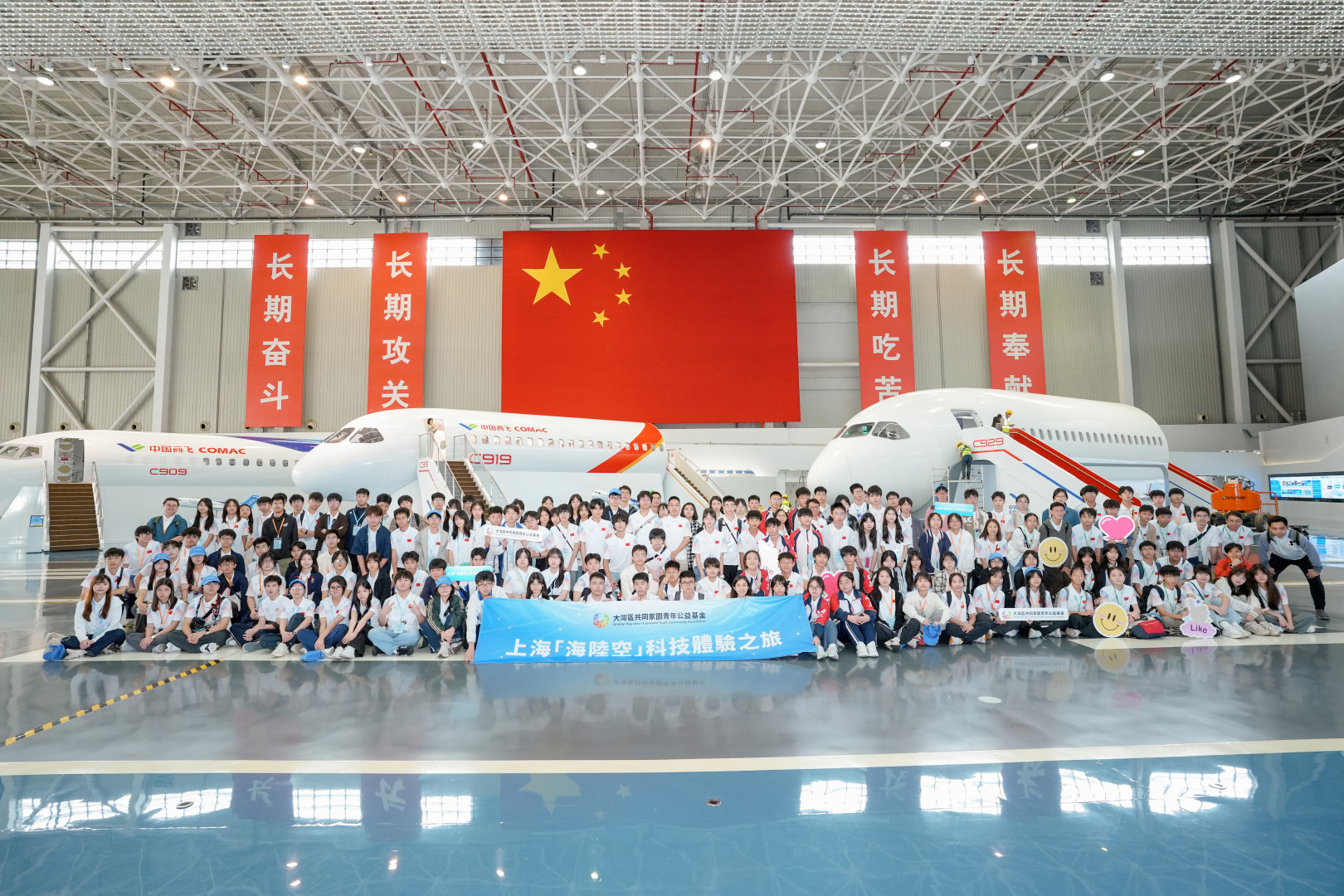
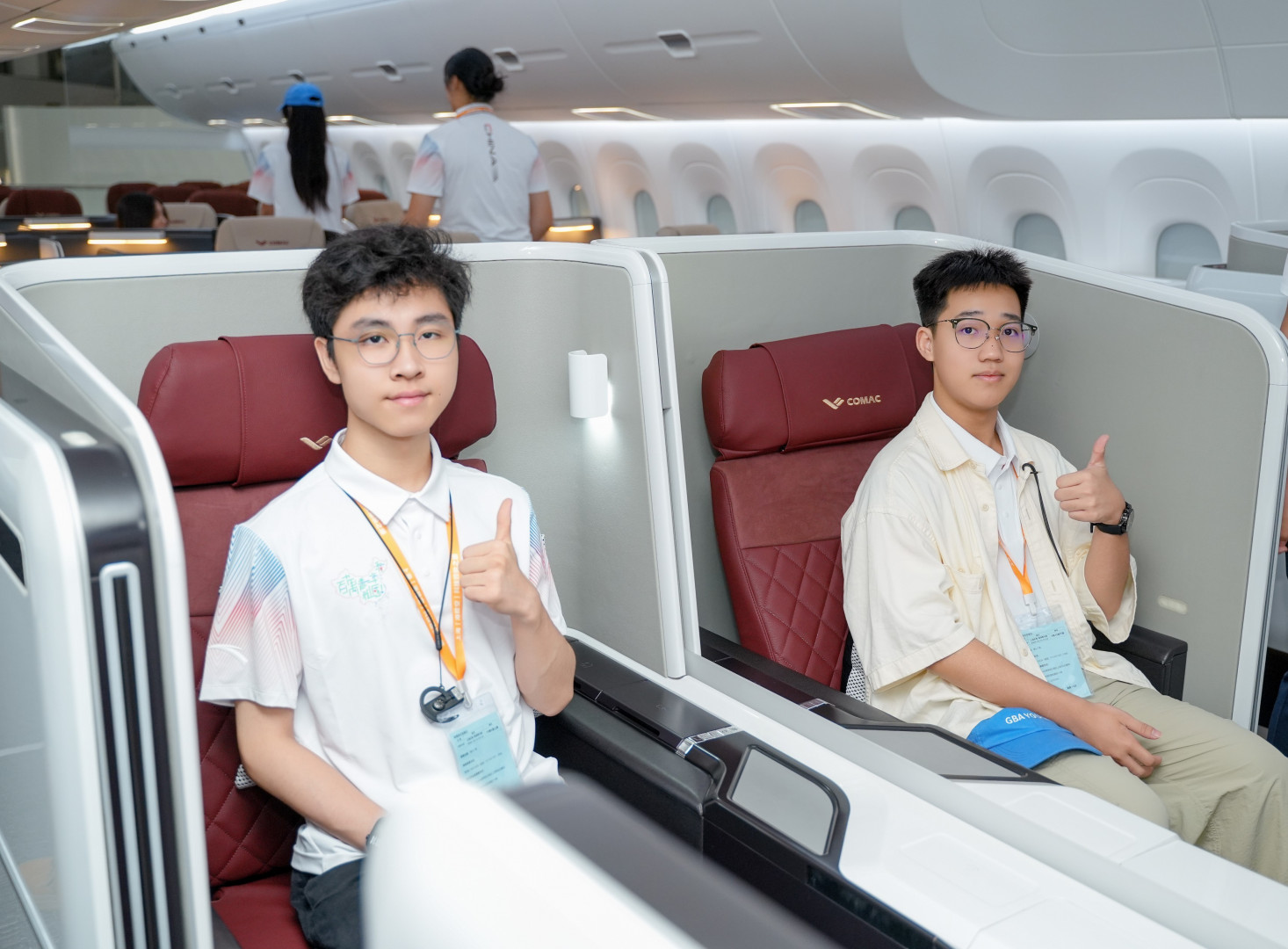
The itinerary also included visits to the COMAC Shanghai Aircraft Design and Research Institute—where students caught a sneak peek of a full-scale (1:1) model of the yet-to-be-released C929 passenger jet—the ZEEKR Intelligent Factory, the China BeiDou Industrial Technology Innovation West Hongqiao Park, Shanghai Whales Bot Technology Co., Ltd., and the Shanghai Science and Technology Museum. Experiencing this array of cutting-edge technology left a deep impression on the students, giving them a profound understanding of the country’s rapid technological development, helping them consider future career paths and inspiring their ambition to contribute to the nation.
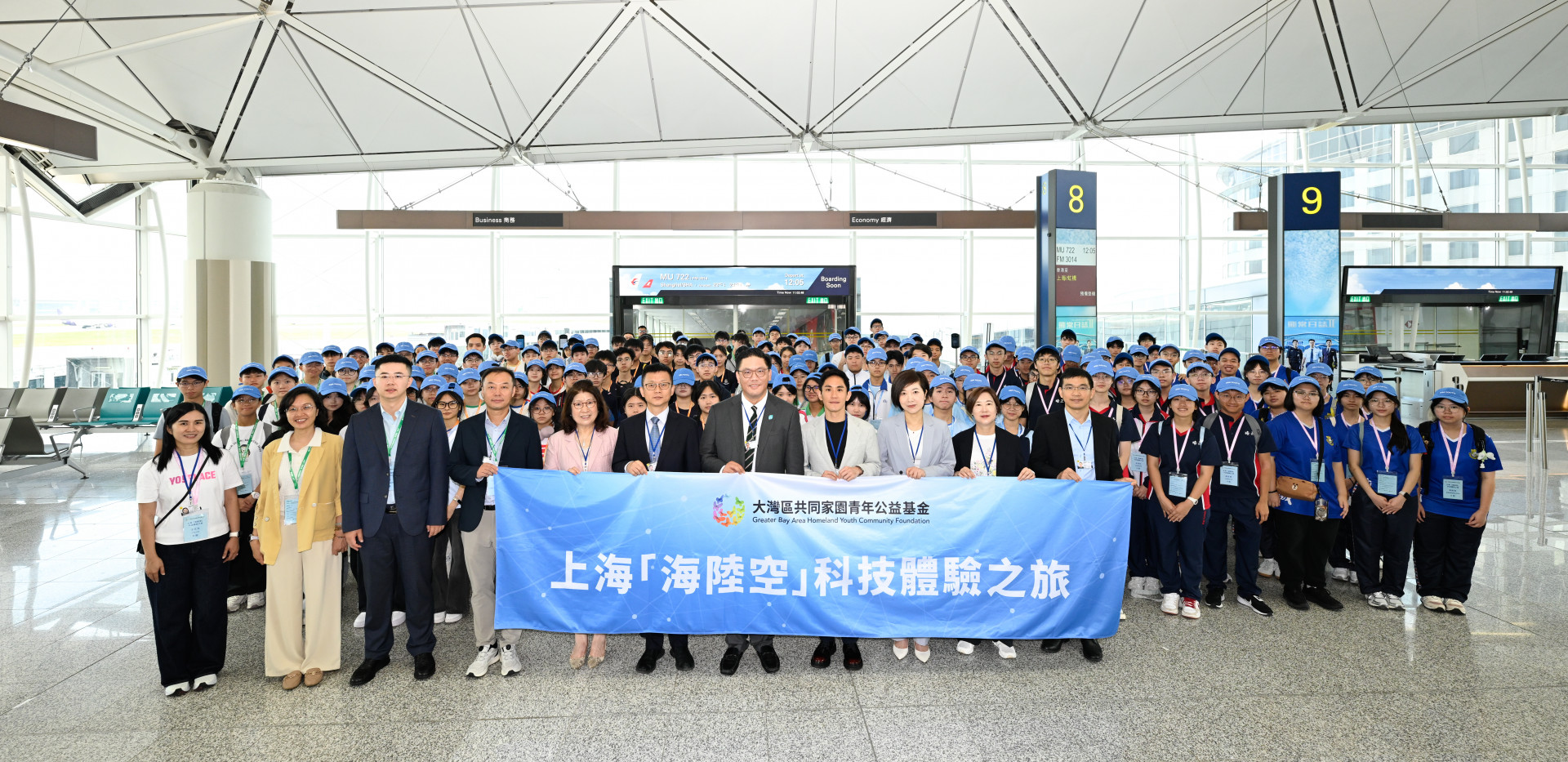
At the airport departure ceremony, Mr Albert CHUANG, Vice‑Chairman of the All‑China Youth Federation, Member of the Legislative Council of the HKSAR, and Vice‑Chairman of the Greater Bay Area Homeland Youth Community Foundation, said: “Shanghai is a vital economic, financial and technological innovation hub for the nation. In line with the country’s 15th Five‑Year Plan to position the nation as a global leader in technology, transport and manufacturing, the Foundation has fully sponsored this ‘Sea, Land and Air’ themed tour to allow students to experience China’s latest transport innovations across all three domains.”
Mr Clarence LEUNG, Acting Secretary for Home and Youth Affairs of the HKSAR Government, also attended the ceremony to see the students off and offered words of encouragement: “This Shanghai tour arranged by the Greater Bay Area Homeland Youth Community Foundation is a rare and invaluable opportunity to understand the nation’s economic progress, as well as its people, culture and society. I hope the students bring the knowledge they gain back to Hong Kong.”
Other notable guests at the departure ceremony included Mr CUI Feng, Second‑Class Inspector of the Youth Department of the Liaison Office of the Central People’s Government in the HKSAR; Ms Yeuk‑hung WONG, Ex‑officio Council Member of the Greater Bay Area Homeland Youth Community; Ms Cathy WEI, Ex‑officio Council Member of the Greater Bay Area Homeland Youth Community Foundation; Mr YANG Bin, Chief Executive Officer of the Greater Bay Area Homeland Youth Community Foundation; Ms Dionne KUNG, Deputy Chief Executive Officer of the Greater Bay Area Homeland Youth Community Foundation; and Mr YU Yang, Director of the Hong Kong and Macau Compatriots Reception Office of Guangdong Province.
【Sea】Jiangnan Shipyard: An iron giant with countless ‘firsts’
The most highly anticipated stop for the students was the historic, technologically advanced Jiangnan Shipyard. A large‑scale modern shipbuilding enterprise under China State Shipbuilding Corporation, its roots trace back to 1865 with the founding of the Jiangnan Machine Manufacture General Bureau in the Qing dynasty. It has created countless ‘firsts’ in China’s industrial history—including the nation’s first steel furnace, first steel cannon, first ironclad warship, first submarine and first frigate; modern guided‑missile destroyers; the ‘Yuanwang’ series of aerospace tracking ships; the aircraft carrier Fujian; and a range of advanced ultra‑large commercial vessels. Owing to its sensitive defence‑related operations, it is seldom open to in-bound visitors.
Christy Shek, a student from Kwai Chung Methodist College, said: “Seeing each ship with my own eyes was incredibly breathtaking; the deck alone was as large as four football pitches. I was amazed that the country could build vessels of such scale and sophistication. Looking up at these massive ships from below felt truly spectacular.”
【Air】COMAC: A glimpse of the C929 model ignites aerospace dreams
Flying on the C919 and visiting the aircraft design institute were other major highlights of the trip. Established in 2008, COMAC (Commercial Aircraft Corporation of China) is the main entity driving the country’s mission to become an aerospace powerhouse. The C919 is a new‑generation, single‑aisle mainline passenger jet developed in accordance with international airworthiness standards and has entered regular commercial service in recent years. On this trip, the chartered flight allowed students to experience the cabin layout first‑hand and enjoy a comfortable journey.
Aydan Lau, a student from Elegantia College, said: “At the COMAC design institute, we saw 1:1 scale models of different aircraft, including the C909, C919 and C929. The biggest surprise was seeing the C929, which has not yet been launched. It is wider than the C919, featuring a first‑class cabin in addition to business and economy classes, and we even got to step inside the cockpit.”
The students also visited the China BeiDou Industrial Technology Innovation West Hongqiao Park. The Spaceborne On‑board Passive Hydrogen Maser, independently developed by the Shanghai Astronomical Observatory of the Chinese Academy of Sciences, left them in awe. With a maximum precision of one second over ten million years, this exacting time control enables the BeiDou system’s ranging and timing performance to significantly outperform similar foreign systems.
Aydan Lau added: “In the past, I could only watch aerospace launches on TV. Seeing a precision instrument like the hydrogen maser today really brought home the nation’s dedication to scientific research. Visiting the BeiDou park and thinking about the story of LAI Ka‑ying, Hong Kong’s first female payload specialist, made me feel that joining the aerospace industry is not an unreachable dream.”
【Land】ZEEKR Intelligent Factory: A 100% automated ‘dark factory’ showcasing smart Chinese manufacturing
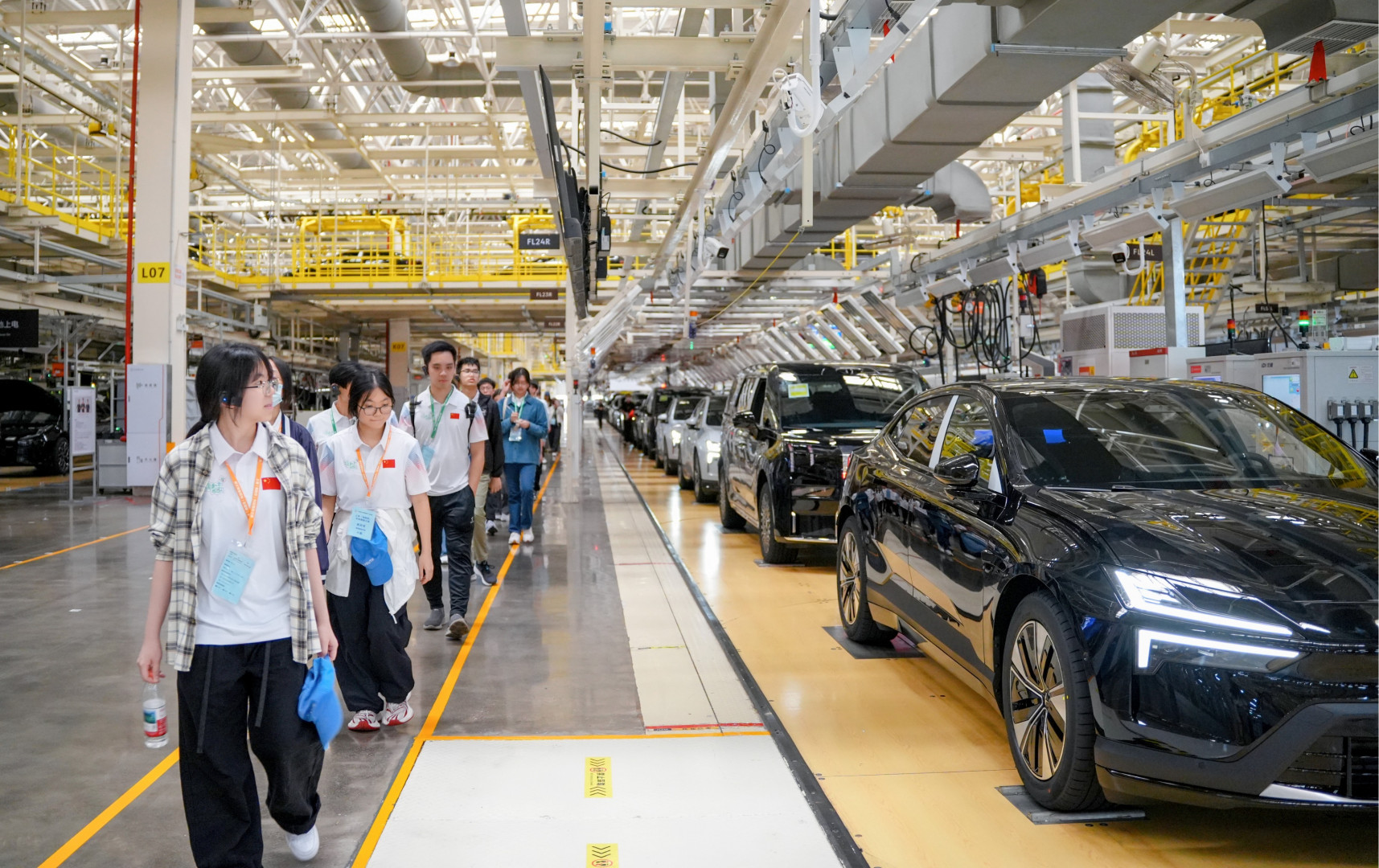
In smart transportation, the students visited the ZEEKR Intelligent Factory, a ‘dark factory’ (lights‑out facility) that operates at 100% automation. ZEEKR is a premium pure‑electric vehicle brand under Geely Auto. Inside, 703 robots work automatically and methodically, making the entire workshop feel like a scene from a science‑fiction film.
【Science】Shanghai Science and Technology Museum: Exploring the balance between new energy and nature
The students also toured the Shanghai Science and Technology Museum. The most memorable area for many was the ‘Powering the Future’ exhibition, which showcases China’s research into clean energy sources such as solar and wind power.
Hearly Lam, a student from Po Leung Kuk No.1 W. H. Cheung College, shared: “The tour guide asked us why wind turbines have three blades instead of two or ten. It turns out three blades provide the optimal balance between power‑generation efficiency, structural stability and noise control. Producing a single blade costs around RMB 300,000, so wind energy is not just about putting up a fan but requires complex calculations. Energy development also impacts the environment. For instance, tidal power can disrupt marine ecosystems, and wind turbines can affect birds. We have to find a way to coexist with nature and strike a balance between energy growth and conservation. Because wind and solar power are weather‑dependent and intermittent, we still need nuclear and traditional energy sources to back them up.”
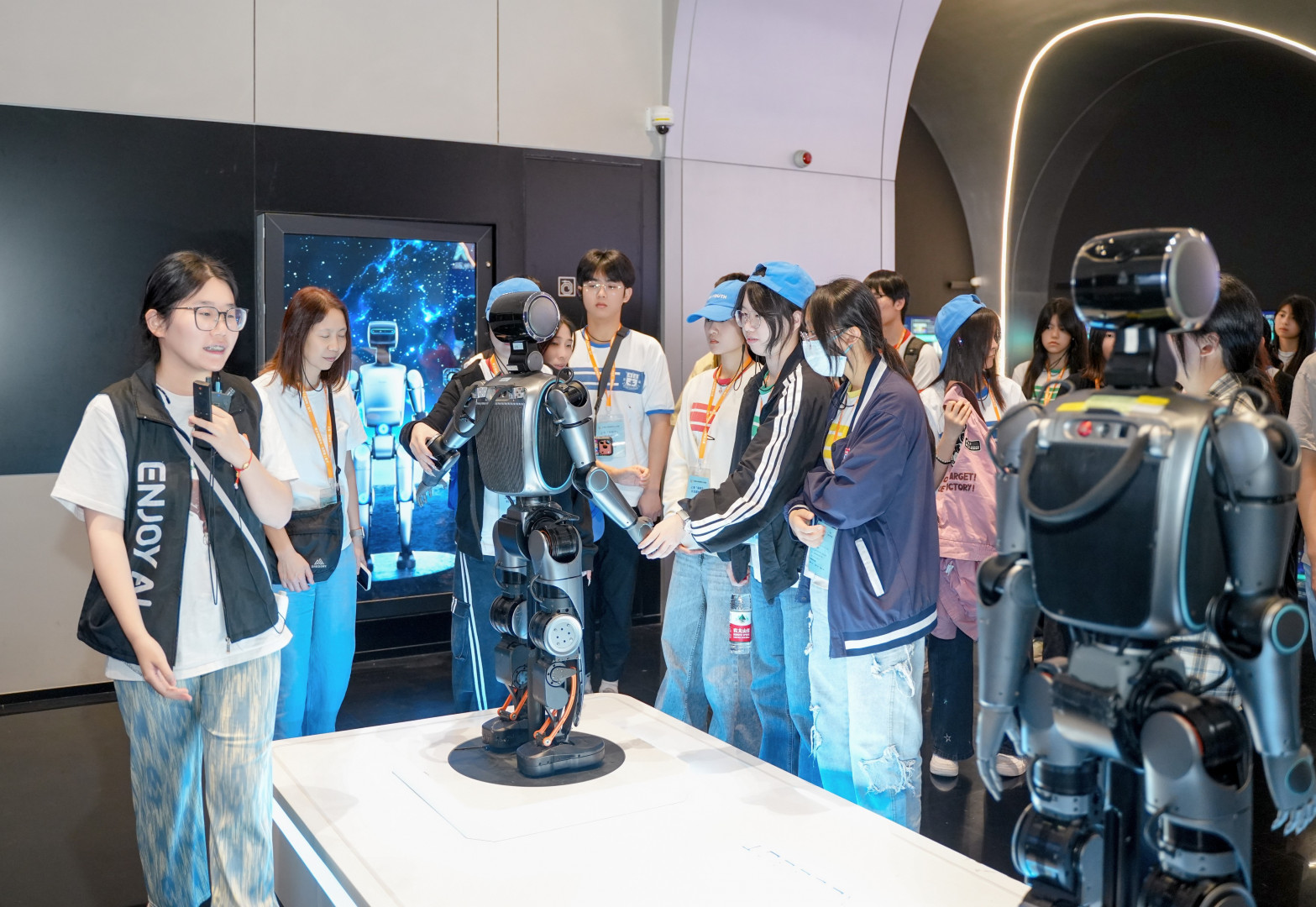
The group also visited Whales Bot, a high‑tech company focusing on artificial intelligence and educational robotics for young people. At the experience centre, students interacted with the H7 humanoid robot—shaking hands and engaging in voice chats—watched it dance and play football, and tried brain‑controlled racing cars, experiencing the appeal of ‘AI + Sports’ through the fusion of neuroscience and AI algorithms.
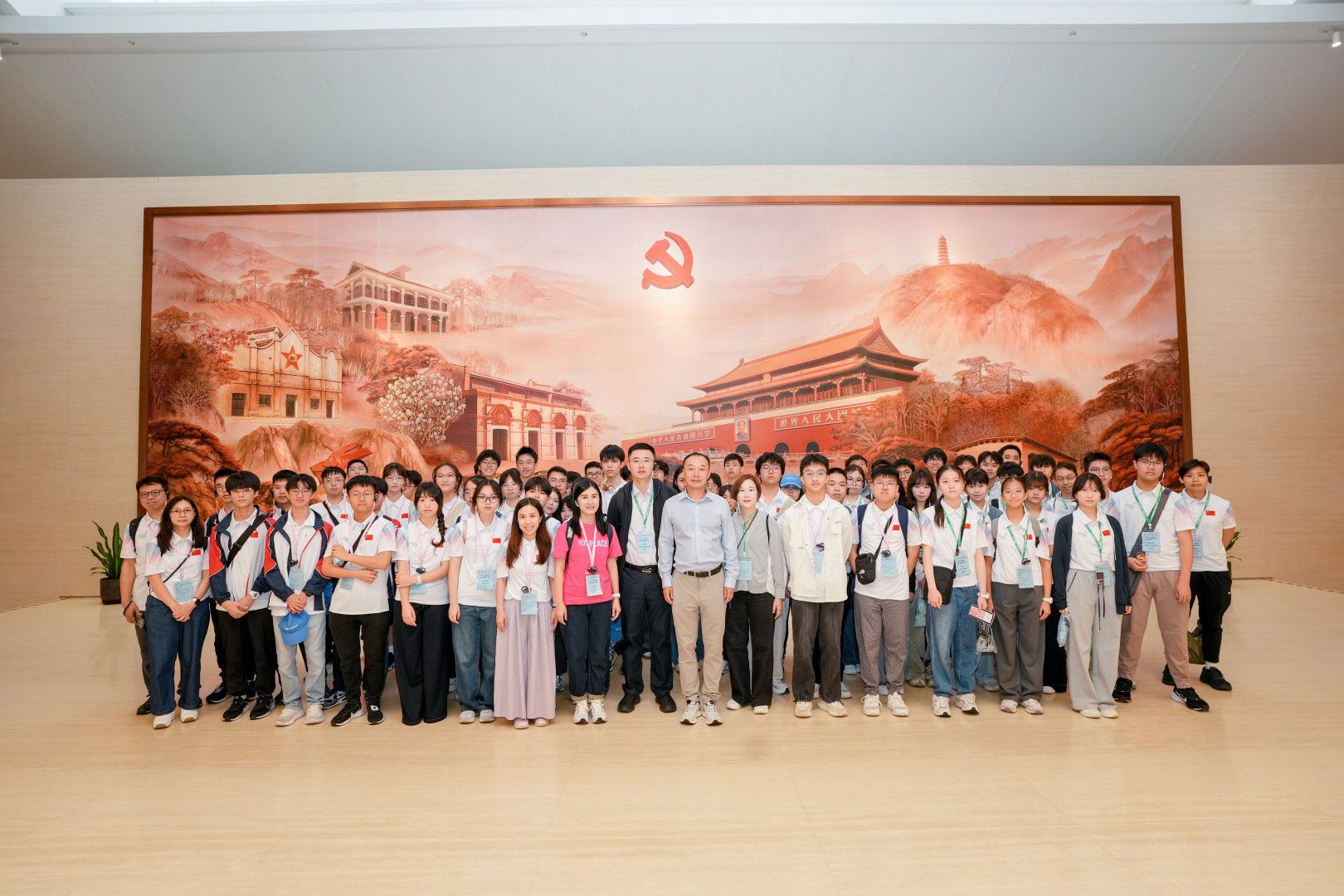
Beyond the technological experiences, the students visited famous cultural landmarks such as Tianzifang, Shanghai Xintiandi, the Memorial Hall of the First National Congress of the Communist Party of China, Nanjing Road Pedestrian Street and the Bund to experience Shanghai’s culture.
“Through this tour, I’ve recognised the country’s technological progress and how its development ranks among the top in the world, which makes me feel incredibly proud. Some say AI will replace humans, but as long as we use it well and collaborate with it, it will yield massive results. My dream now is to join one of the cutting‑edge industries I visited,” concluded Lau.